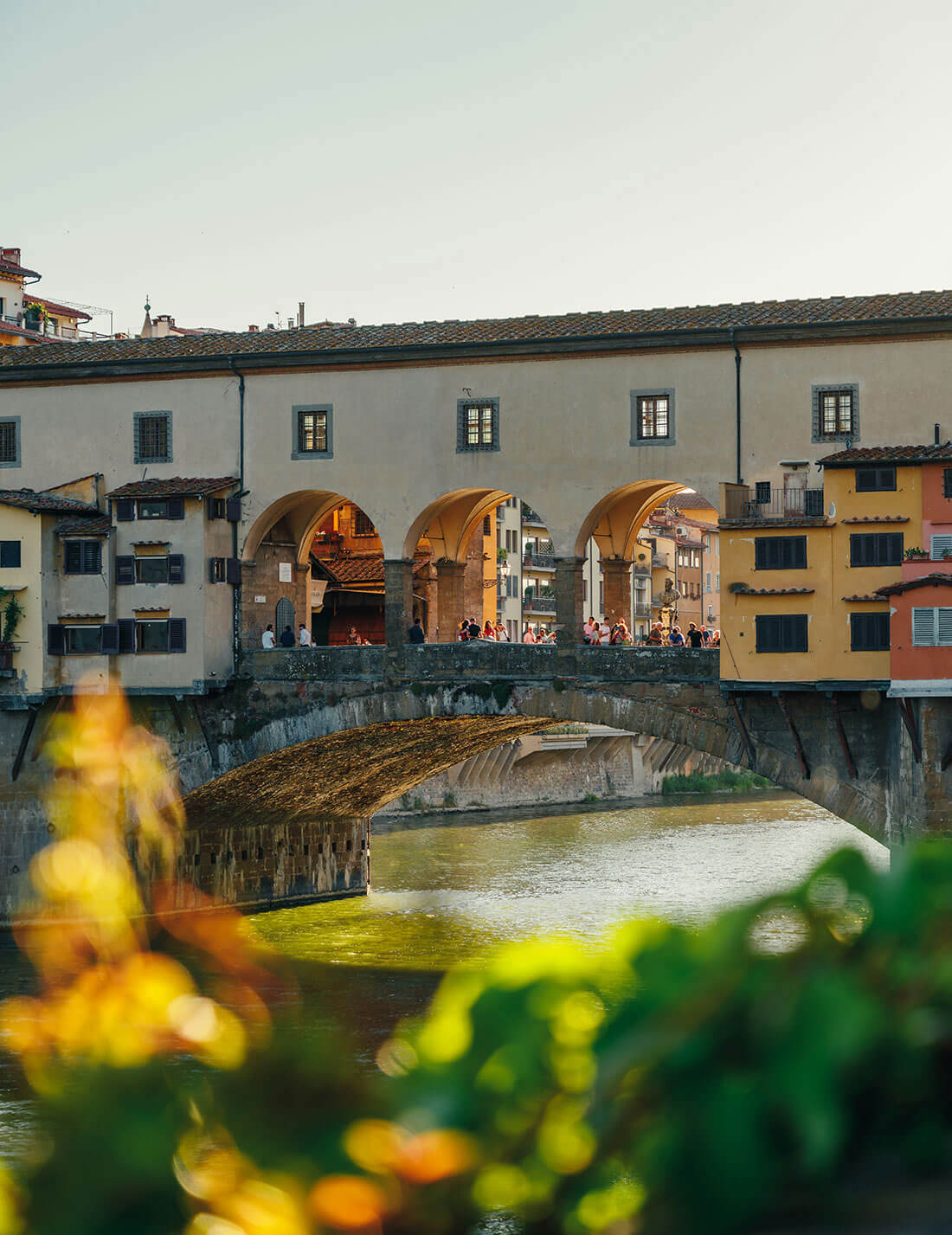
Everything changed on the night of 3 August 1944, when the retreating German army destroyed much of the area surrounding Ponte Vecchio. In just a few moments, homes, streets and centuries-old memories were transformed into a landscape of rubble and silence.
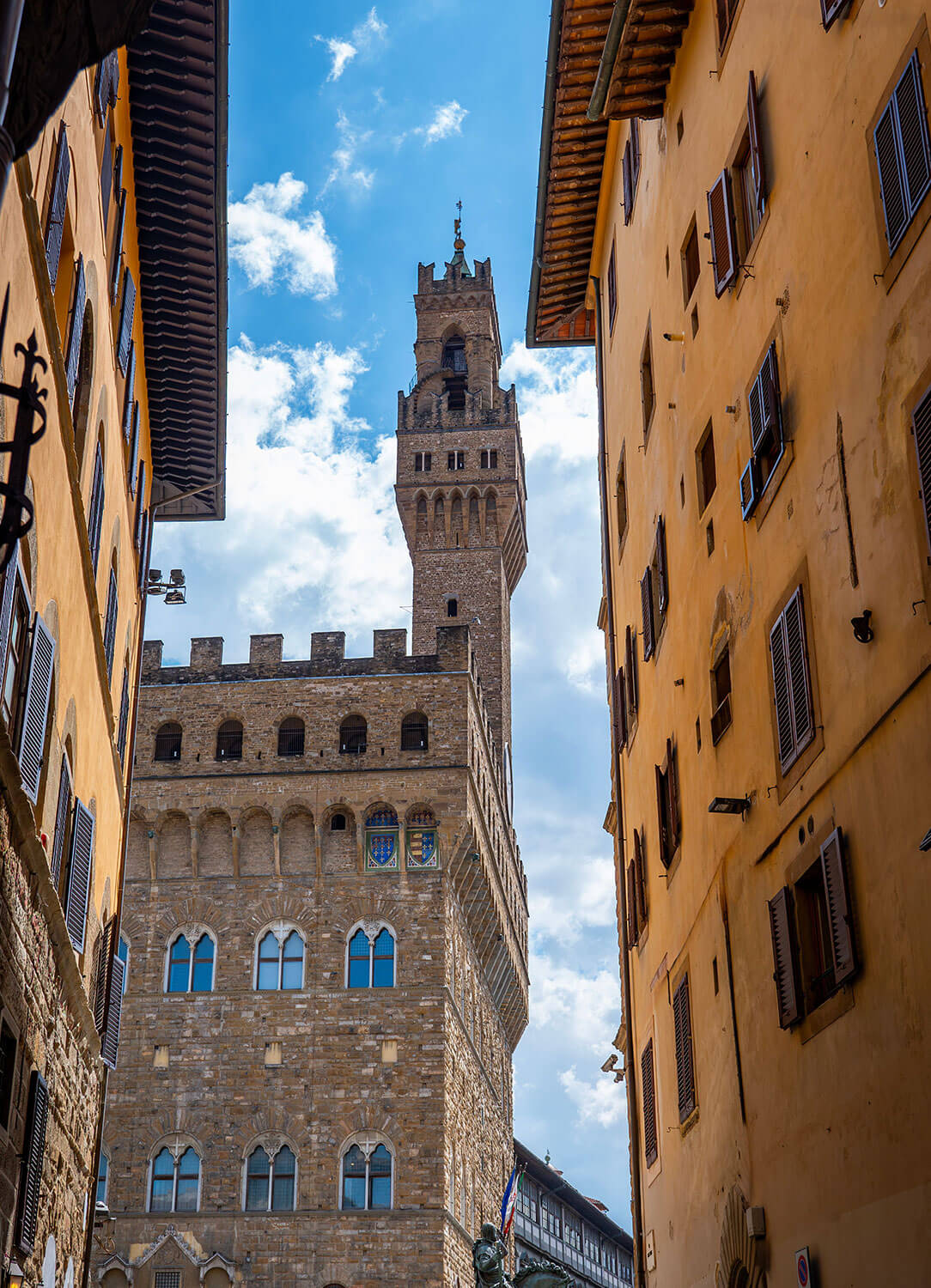
When the war ended, the city faced a difficult choice: rebuild or preserve the void as a testament to the destruction. The debate was intense. Some envisioned an open space that would allow history to breathe again, creating an ideal visual dialogue between Brunelleschi’s Duomo and Palazzo Vecchio, between the Renaissance and the Middle Ages. But post-war Florence also needed to look ahead, to regain its economic and commercial vitality.
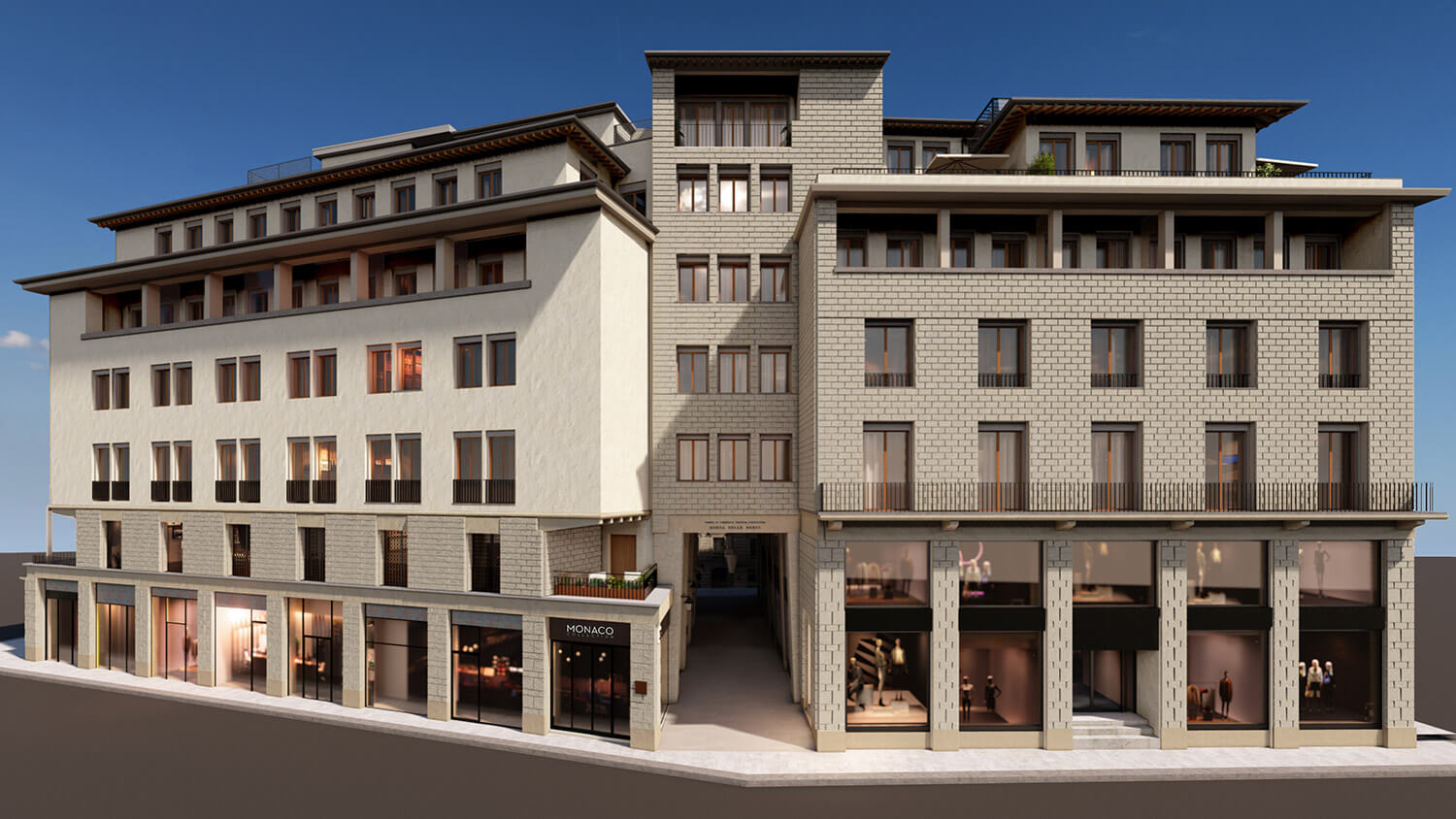
Thus, between 1949 and 1953, the new Commodity Exchange was created, commissioned by the Chamber of Commerce as a symbol of recovery. Its austere and modern architecture sparked contrasting opinions. For some, it represented a necessary statement of the future; for others, it was a foreign element within the delicate balance of the historic city centre. Yet behind the severity of its lines, the building carried a clear message: the will of a wounded city to rise again and start over.
Over the years, the building changed function several times, following the transformations of the city. In 2008 it became a space dedicated to contemporary commerce, but the artworks and historical elements were preserved and restored, reminding us that each era leaves its mark without completely erasing what came before.
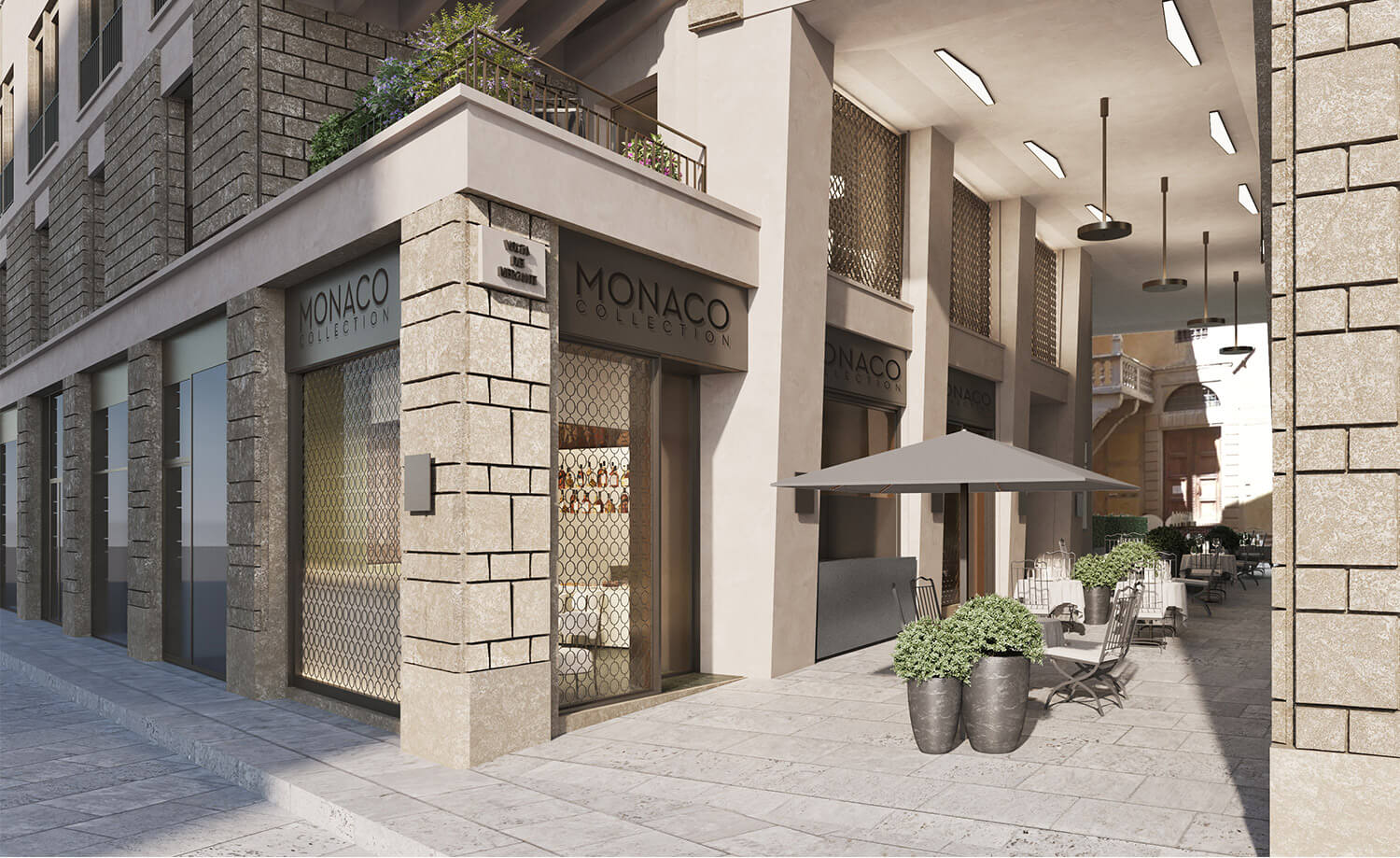
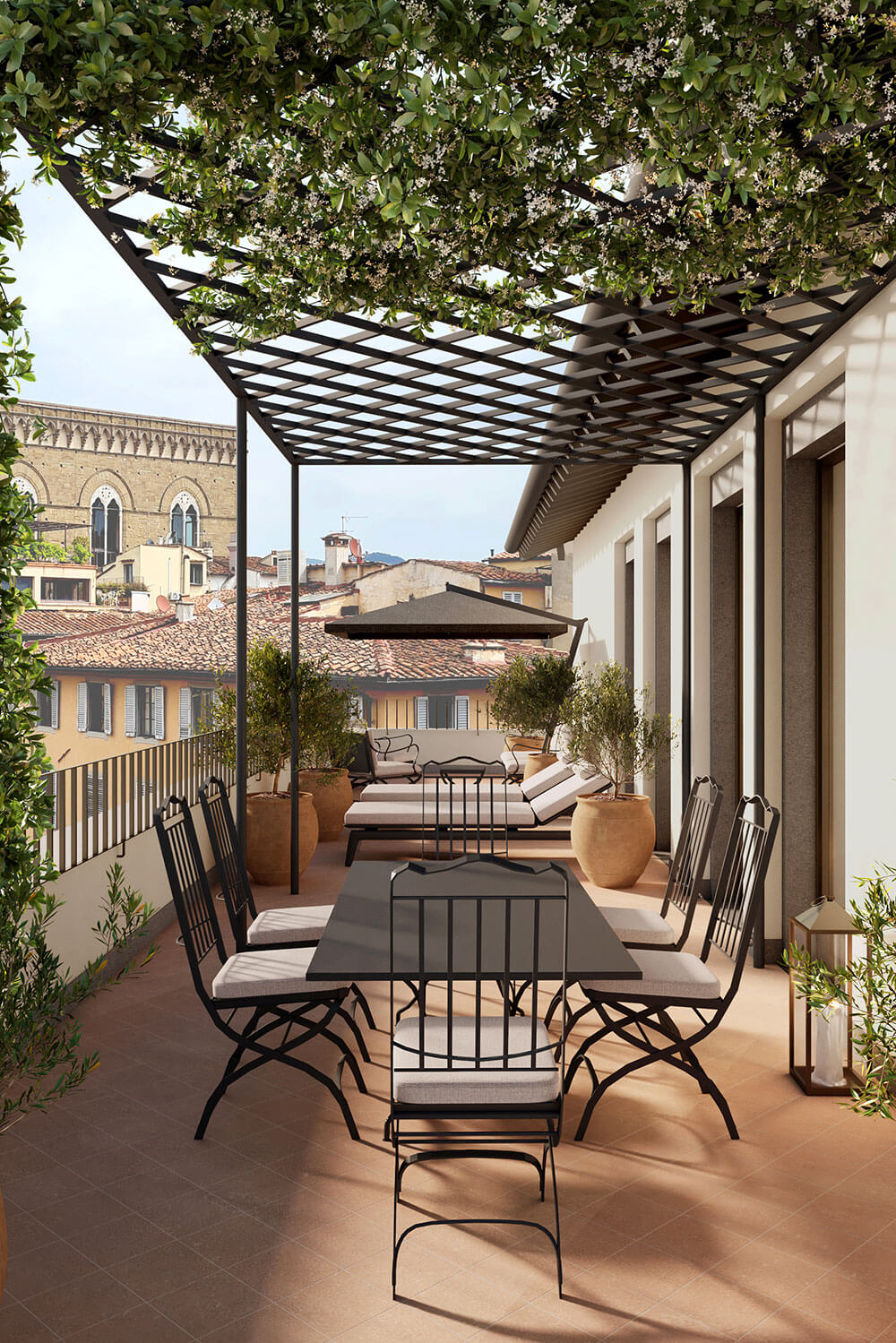
Today, the former Commodity Exchange is preparing for a new transformation. By 2026, its halls will welcome a hotel, adding a new chapter to a story of destruction and rebirth, memory and innovation. And perhaps this is its deepest meaning: to be a symbol of a Florence that, throughout the centuries, has always known how to reinvent itself while preserving the dialogue between its past and its future.